
Throughout the lifecycle of a research project, we accumulate a mountain of documentation: breakthrough data, nuance-rich conversations and innovative pivots. Historically, this “educational IQ” lived in white papers, posters, or journal PDFs.
In 2026, if your research isn’t publicly visible, it’s effectively invisible.
What if this content lived in a dedicated content channel? Not just a repository, but a strategic engine that repurposes insights into engaging science explainers and video content that builds your profile, increases citations and secures funding.
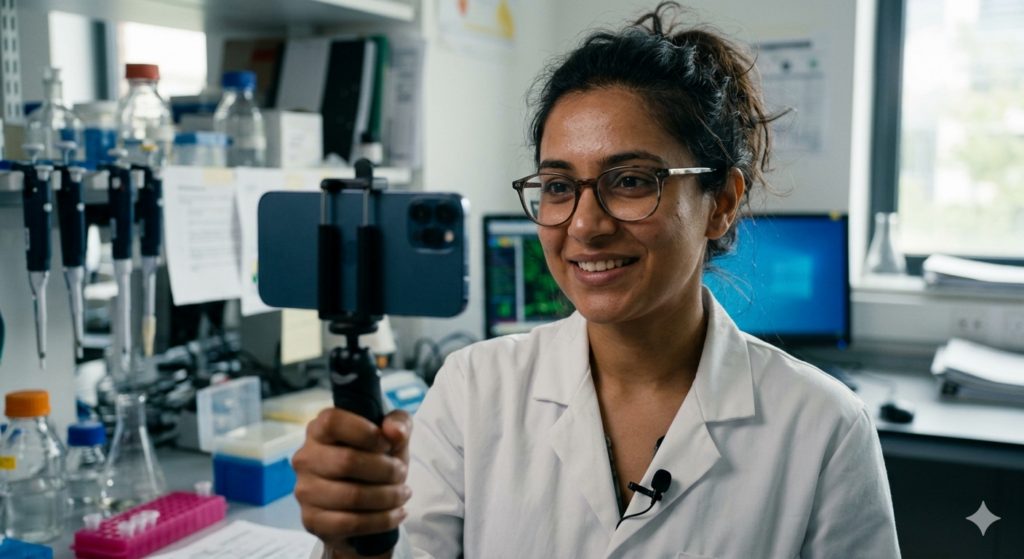
What is a Research Content Channel?
A channel is more than a YouTube page; it is a blueprint for leaving a digital legacy. It is a method for moving from being a “contributor” to becoming the trusted voice in your field.
It’s not just “Another Website”
Vlogs, podcasts, and video series are not extensions of your university’s homepage. Your channel isn’t about the institution; it’s about the audience. It’s about solving their curiosity and providing clarity in an era of information overload.
The economic insanity of North Sea oil and gas – By Simon Clark – Science Influencer
Impartial and Unbiased
Independent channels champion the category (e.g., Quantum Computing or Urban Ecology) rather than a specific sponsor. Because research projects are inherently driven by data and innovation, they are the perfect vehicles for impartial, high-authority content that people actually trust.
5 Steps to Building a Research Channel
1. Define Your Category
Don’t just talk about “Science.” Define your niche: Sub-orbital Logistics, CRISPR Ethics, or Regenerative Urbanism. Category design introduces the world to new ways of thinking. Channels that explore specific categories move the needle by solving problems people didn’t know they had—or by reimagining a known problem with a radically different solution. Put your audience’s curiosity at the center.
2. The Strategy (The Game Plan)
Before you hit record, define what success looks like. Is it policy change? More PhD applications? Industry partnerships? Your strategy should include:
-
Objectives: Impact-driven goals.
-
Work Packages: How the research translates to scripts.
-
Timeline: Aligning content releases with funding cycles or conferences.
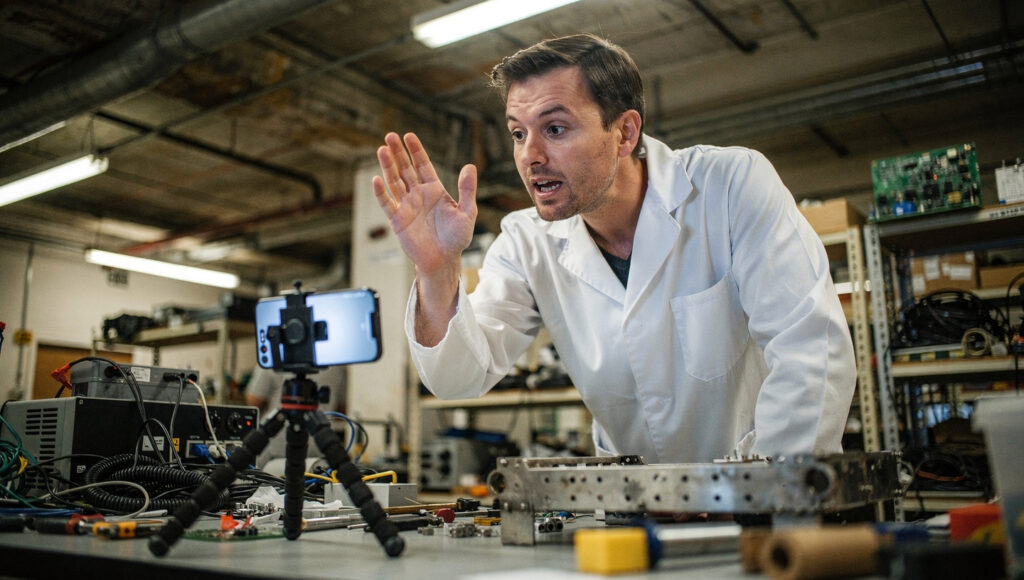
3. Establish a Trusted Voice
To lead a category, you must manage demand in three ways:
-
Create Demand: Educate people who don’t know they need your research yet.
-
Counter Demand: Intercept old-school thinking. (e.g., “You thought traditional carbon capture was the only way; here is why ‘Ocean Alkalinity Enhancement’ is the 2026 standard.”)
-
Capture Demand: Be the first result when stakeholders search for your specific innovation.
Modern Example: Check out Kurzgesagt – In a Nutshell. While a massive studio now, they are the gold standard for how complex scientific research (from biology to sociology) can be turned into high-engagement “Science Explainers.”
4. Creating High-Impact Content
The “Science Explainer” Format: In 2026, the “Science Explainer” is the most potent tool in HE. These are 3–7 minute videos using motion graphics or high-quality visuals to break down a complex paper.
-
Start Now, Refine Later: Academic perfectionism is the enemy of engagement. Your first video won’t be a masterpiece, but it will be data.
-
Video vs. Audio: The answer is both. Record your interviews on video; use the audio for a podcast and the transcript for a blog. This “COPE” method (Create Once, Publish Everywhere) ensures maximum ROI on your time.
-
The Power of Narrative: Move away from “we did X, then Y.” Use design thinking to frame your research as a solution to a global or industry problem.
Modern Example: The Royal Institution has mastered the art of long-form research lectures turned into digestible, high-production digital content.
5. Monitor, Adjust, and Scale
In HE, we often focus on quantitative data (hits, clicks). But for research, qualitative signals matter more.
-
Who is engaging?
-
Are industry leaders commenting?
-
Is the “Science Explainer” being shared by peers in your field?
-
What questions are being asked in the comments? (This is your “homework” for the next video).
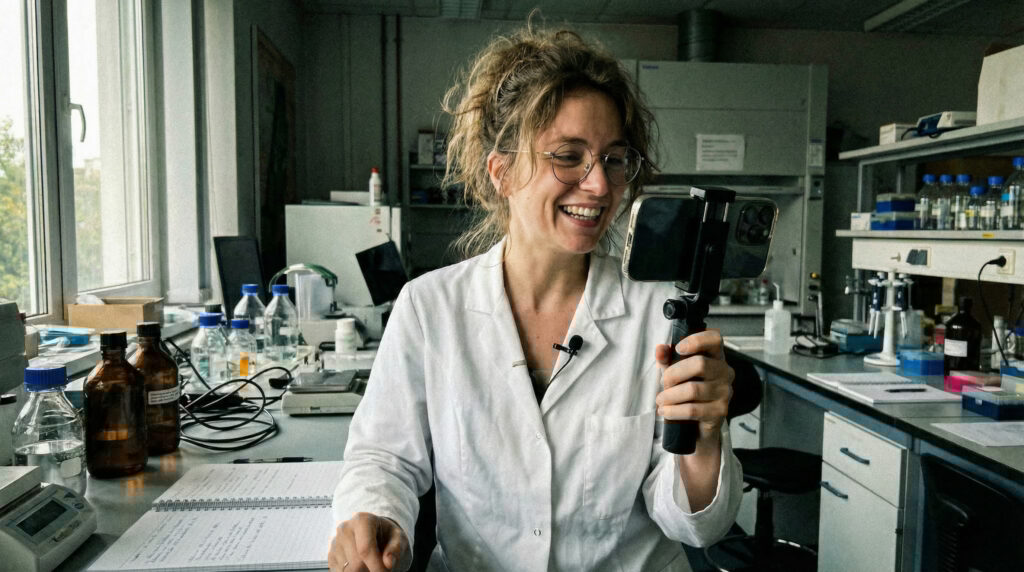
A research channel takes your findings out of publications, journals and conferences and into the ecosystem of peers, investors, and community leaders.
“Try not to become a person of success. Rather become a person of value.” — Albert Einstein
Ready to turn your research into a high-impact visual channel? We specialise in helping research leaders bridge the gap between complex data and engaging video storytelling. Drop us a message to start your 2026 content strategy.